
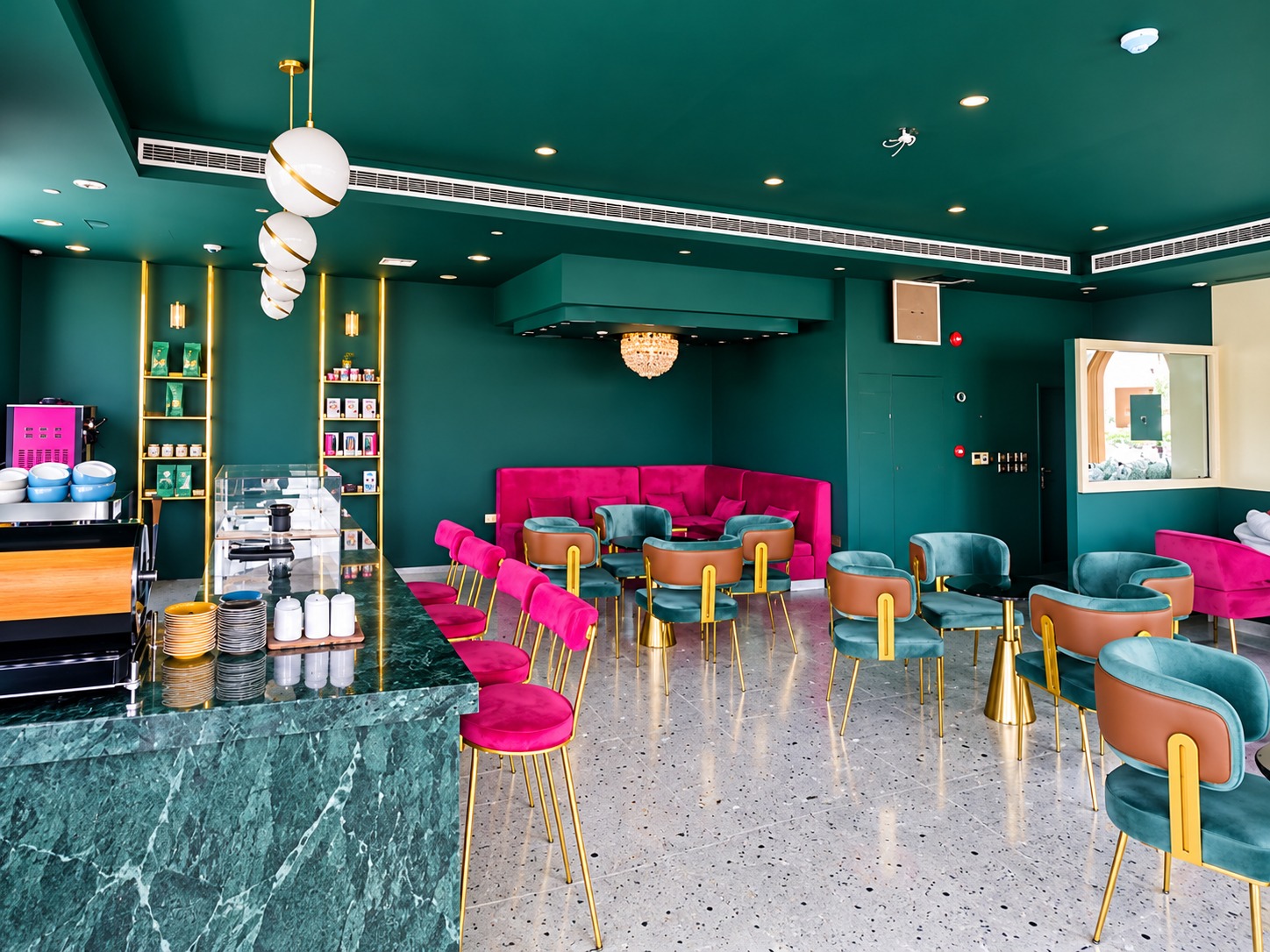
There’s a particular smell I’ve come to associate with a cafe project on the day the keys get handed back to the owner: fresh paint, machine coffee, and a faint trace of sawdust that never quite leaves a site. After decades of walking clients through this exact journey, from a napkin sketch to a working espresso machine on opening morning, I can tell you the biggest surprise for most first-time cafe owners in Dubai isn’t the design. It’s how much has to happen before a single tile gets laid.
If you’re planning a cafe fit-out in Dubai, whether it’s a 40-square-meter specialty coffee bar in Al Quoz or a full-scale restaurant concept on Sheikh Zayed Road, this guide walks through what actually happens on a real project, not the sanitized version you’ll find in most brochures.
Why Cafe Fit-Outs in Dubai Are Their Own Animal
Dubai isn’t a forgiving market to learn fit-outs in. Between Dubai Municipality food and safety codes, DEWA approvals, Civil Defence fire compliance, and depending on your location a landlord’s own fit-out manual (Emaar, Nakheel, and DMCC all have their own, and they’re not identical), a cafe fit-out here involves more regulatory choreography than almost any other retail category.
This is precisely why so many owners come to us after a false start with a general contractor who was excellent at homes or offices but had never dealt with grease trap sizing, exhaust hood clearances, or a food control inspector’s checklist. A cafe fitout company in Dubai that specializes in F&B isn’t a luxury; it’s the difference between opening on schedule and sitting on a signed lease with no income for three extra months. At Stofix Technical Services LLC, this is the gap we were built to close.
Stage One: Concept and Feasibility (Before You Sign the Lease, Ideally)
I always tell clients the same thing: the best fit-out decision you’ll ever make happens before you sign anything. A unit’s ceiling height, existing grease trap infrastructure, available power load, and even the direction the exhaust duct can run will quietly decide your entire kitchen layout and your budget.
At this stage, experienced fit-out contractors in Dubai will typically:
- Review the unit’s as built drawings and MEP capacity
- Assess whether the space can support your intended kitchen equipment (a full show kitchen concept has very different exhaust and power needs than a grab and go coffee bar)
- Flag landlord fit-out guideline restrictions early; many malls, for instance, dictate shopfront materials, signage size, and even permitted hours for noisy works
- Give you a realistic cost range, not a number designed purely to win the job
If you can get a fit-out partner involved before signing the lease, do it. It has saved more than one client from a unit that looked perfect but had no viable route for a kitchen exhaust riser.
Stage Two: Design Development
This is where the vision starts taking shape on paper layout, seating capacity, back of house flow, branding, lighting, and material palette. A well run design phase balances three things that are often in tension: what looks beautiful, what’s operationally efficient for your staff, and what’s actually buildable within Dubai’s codes and your budget.
A few things I’ve learned the hard way over the years rarely make it into a mood board:
- Back of house flow decides your labor costs for years: A barista who has to cross the same six foot gap forty times an hour because the milk fridge is on the wrong side of the machine is a hidden cost you’ll pay every single day the cafe is open.
- Ventilation and acoustics get bolted on as afterthoughts, and it shows: Cafes are loud by nature espresso machines, milk steaming, and conversation bouncing off hard surfaces. The better fitout companies in Dubai budget for acoustic treatment in the design stage, not as a retrofit after customers complain.
- Your shopfront has about three seconds to work: In malls and busy streets alike, that’s roughly how long you have before a passerby decides whether to walk in. This is where signage regulations, glazing choice, and branding all have to align and where a lot of design time is well spent.
Stage Three: Approvals The Part Nobody Enjoys But Everyone Needs
This is the stage where inexperienced contractors quietly become a liability. In Dubai, a cafe fit-out typically requires sign off across several authorities, and the sequence matters:
- Trade license and initial NOC from the relevant free zone or the Dubai Department of Economy and Tourism (DET), depending on location
- Dubai Municipality Food Control approval for kitchen layout, drainage, and food safe finishes
- Civil Defence approval for fire safety systems, extinguishers, and emergency exits
- DEWA approval for power load and, where applicable, gas connections
- Landlord/mall management sign off on final design and construction method statement
Every one of these has its own drawing standards and its own reviewer expectations, and they don’t always move in parallel. A restaurant fitout contractor in Dubai who has submitted hundreds of these packages knows which reviewer at which authority tends to flag what and designs around it in advance rather than resubmitting three times and burning six weeks in the process. It’s a skill set that only comes from repetition, something our team at Stofix Technical Services has built up project after project.
Stage Four: Construction Where the Real Coordination Happens
This is the phase people picture when they think “fit-out,” but by the time it starts, roughly half the real work planning, approvals, and procurement are already behind you. On site, a good fit-out contractor is really running a coordination exercise between multiple trades: civil works, MEP, joinery, kitchen equipment installation, and finishes, often within a tight mall access hours window that might only allow noisy work between midnight and 6 a.m.
This is where the difference between generalist fit-out contractors in the UAE and F&B specialists becomes obvious. Kitchen equipment installation alone requires precise coordination between the electrical, plumbing, and mechanical teams. If they get the sequencing wrong, you’re chasing snags for weeks after opening, usually at the worst possible time, mid service. Reliable cafe fit-out contractors treat this sequencing as the backbone of the whole build, not an afterthought once the walls are up.
Stage Five: Snagging, Testing, and Handover
Before any fit-out team hands back the keys, everything gets tested under real operating conditions, not just switched on and checked off on a list. Espresso machines run at full pressure, exhaust systems are checked under actual cooking load, grease traps are tested, and every finish gets a final walk through against the approved drawings.
A properly run handover includes as built drawings, equipment warranties, maintenance schedules, and critically a fully compliant Civil Defence and Food Control sign off certificate. Skipping this step to open a week earlier is one of the most common regrets I hear from owners a year into operation.
Choosing the Right Fit-Out Partner
Not every contractor offering interior fit-outs in Dubai has genuine F&B experience, and it’s worth asking pointed questions before signing anything:
- Have you delivered cafe or restaurant projects with a working kitchen, not just retail or office fit-outs?
- Can you walk me through your Dubai Municipality Food Control approval process, specifically?
- Who manages MEP coordination on site? Is it in house or subcontracted?
- Can I see a project with a similar footprint and kitchen complexity to mine?
Among fit-out contractors in Dubai, this conversation separates the teams who’ve genuinely built cafes from the ones who are learning on your budget. At Stofix Technical Services, this is the exact conversation we have with every client before a single drawing is produced, because a cafe’s success is decided as much by what happens behind the counter as by what customers see in front of it.
Final Thoughts
A cafe fit-out in Dubai rewards patience, sequencing, and a contractor who has genuinely done this before not once or twice, but enough times to have seen what goes wrong and designed around it. The market here moves fast, competition is real, and a delayed opening costs more than most owners expect. Get the early decisions right, choose a partner who understands both the design and the regulatory side, and the grand opening becomes a formality rather than a gamble. Stofix Technical Services has walked this path with cafe and restaurant owners across Dubai, and we’re happy to walk it with you next.
FAQs
1. How long does a typical cafe fit-out take in Dubai?
Depending on size and complexity, most cafe fit-outs take between 8 and 16 weeks from approved design to handover. Kitchen heavy concepts and mall locations with restricted working hours tend to run longer.
2. What approvals does a cafe need before opening in Dubai?
At minimum, expect Dubai Municipality Food Control approval, Civil Defence fire safety sign-off, and DEWA approval for power load, along with gas connection approvals from the relevant gas supplier where applicable
3. How much does a cafe fit-out cost in Dubai?
Cost depends heavily on your unit’s square footage, kitchen complexity, and the finishes and design you choose. Rather than relying on a generic per square foot figure, it’s best to get a detailed quote after a site survey, since two cafes of the same size can vary significantly in cost depending on their kitchen setup and design ambitions.
4. Should I choose a general contractor or a specialized cafe fit-out company in Dubai?
For any cafe with a working kitchen, a specialist matters. F&B specific approvals, exhaust and grease trap design, and equipment coordination are areas where general contractors often underestimate both time and cost.
5. Can I make design changes once construction has started?
You can, but changes mid construction usually mean resubmission to one or more authorities, which adds time and cost. It’s far more efficient to lock design decisions during the design development stage.