
When a warehouse starts to feel crowded, moving to a bigger unit can seem like the obvious next step. But in many cases, the better answer is to make smarter use of the space you already have.
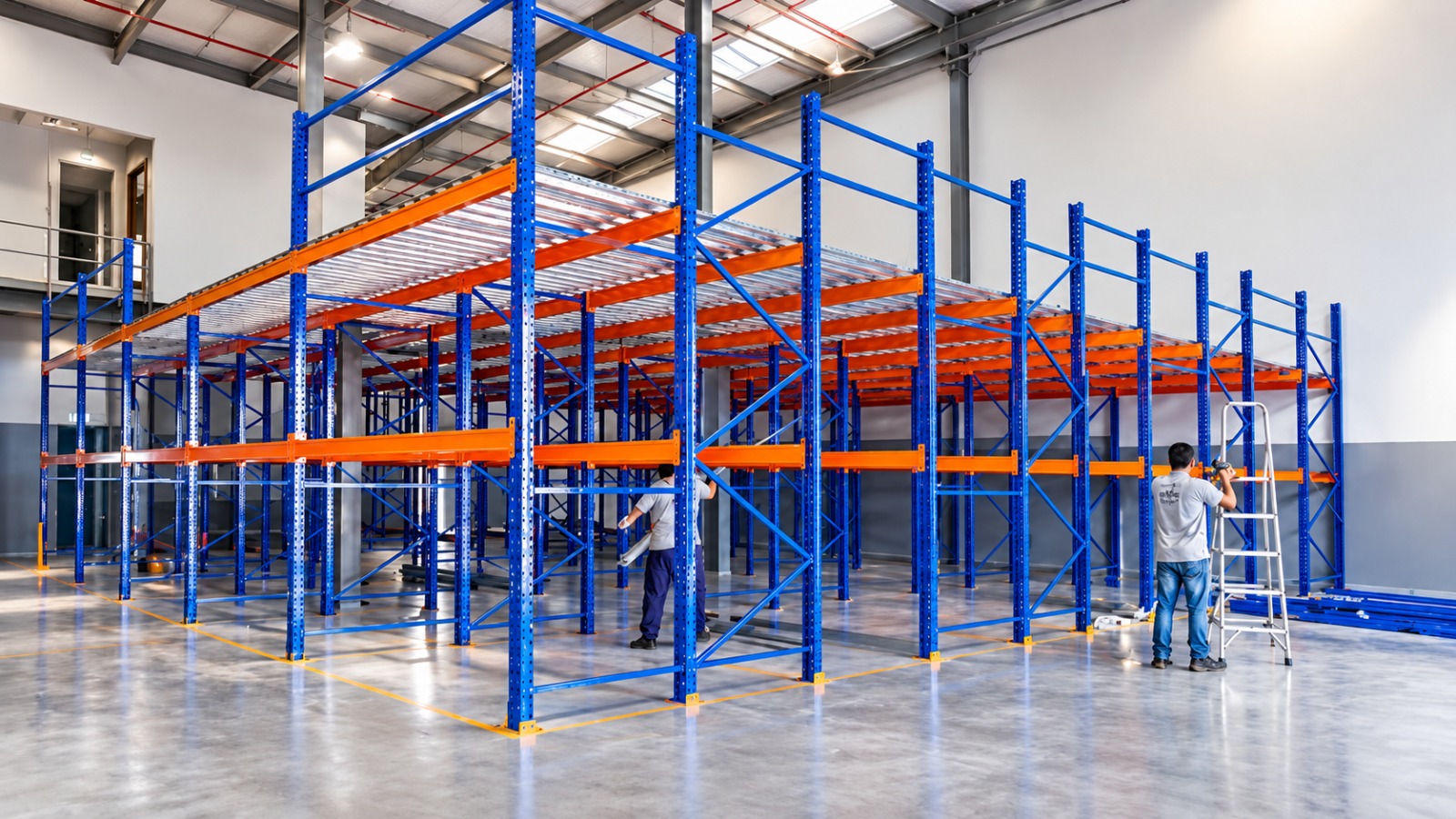
One of the most effective ways to do that is by combining Warehouse Racking Dubai solutions with a well-planned mezzanine floor. Instead of using only the ground level, you begin to use the full height of the building, which can create valuable additional storage and working space.
At Stofix Technical Services, this type of space planning is approached with one goal in mind: making the warehouse easier to use, not just fuller.
Start by Looking Up
A lot of warehouses are busy at floor level but still have several metres of unused height.
That space is often overlooked.
The right racking system allows stock to be stored vertically in a more organised way. Depending on the products, this might include pallet racking, medium-duty shelving, cantilever racks, or multi-tier systems.
Good storage racks suppliers in Dubai should not simply recommend the tallest possible rack. They should first look at the type of stock, product weight, handling equipment, aisle width, and how often items are picked.
That is what makes the difference between a warehouse that looks full and one that actually works efficiently.
Where Mezzanine Floors Make Sense
A mezzanine floor can be extremely useful when a warehouse has enough clear height.
It creates a second usable level within the same building, without increasing the actual footprint.
That extra level can be used for:
- Light stock
- Spare parts
- Packing areas
- Small-item storage
- Office space
- Slow-moving products
For many businesses, this is a practical alternative to relocating.
Of course, every warehouse is different. Columns, ceiling height, structural loads, fire requirements, access points, and existing services all affect what can realistically be built.
That is why mezzanine planning should always begin with a proper site assessment.
Racking and Mezzanines Work Best Together
The strongest warehouse layouts are usually not based on one solution alone.
A combination of racking and mezzanine floors can make much better use of the available volume.
Heavy or fast-moving stock can remain on the lower level, while lighter or less frequently used items are placed above. This keeps day-to-day operations simple while increasing capacity.
Businesses comparing the Best Storage Racks Suppliers in Dubai should therefore look beyond rack pricing. The supplier should be able to explain how the proposed layout will affect picking, replenishment, staff movement, and future growth.
A good design should make the warehouse more efficient, not more complicated.
Choosing the Right Warehouse Storage Products
Not every warehouse needs the same setup.
The most suitable warehouse storage products depend on what is being stored and how the business operates.
Common options include:
- Pallet racking
- Medium-duty shelving
- Bolt-free shelving
- Cantilever racks
- Mezzanine floors
- Multi-tier systems
- Rack protection
- Storage accessories
The important thing is to avoid choosing products in isolation.
For example, adding more shelving may increase capacity, but if aisles become too narrow or stock becomes harder to reach, the overall operation can actually slow down.
That is why layout planning matters just as much as the storage equipment itself.
A Good Storage Solution Should Improve Workflow
A proper commercial warehouse storage solution should do more than create extra capacity.
It should also improve:
- Product access
- Stock organisation
- Safety
- Movement of staff and equipment
- Picking speed
- Future flexibility
This is where practical planning becomes important.
Before adding racking or a mezzanine, it is worth asking simple questions. Which items move fastest? Which stock is rarely touched? Where do deliveries arrive? Where are orders packed? What equipment is used every day?
Those answers help determine where each storage zone should be located.
Why the Right Supplier Matters
An experienced storage racks supplier in Dubai should be able to look at the warehouse as a working environment, not just as an empty box that needs racks.
The supplier should consider:
- Available height
- Floor area
- Product weight
- Stock turnover
- Forklift movement
- Access requirements
- Load capacity
- Future expansion
This is especially important with mezzanine floors because the design needs to work safely with the existing building and the activities below it.
Make Better Use of the Space You Already Have
Before committing to a larger warehouse, it is worth checking whether your current facility is being used to its full potential.
In many cases, there is still a large amount of usable space above the existing storage area.
With the right combination of racking, shelving, and mezzanine floors, that vertical space can be turned into useful storage or operational space.
Stofix Technical Services helps businesses plan practical warehouse layouts that improve space use without making day-to-day operations harder.
FAQs
1. Can a mezzanine floor really increase warehouse capacity?
Yes. If the building has enough clear height, a mezzanine can create an additional usable level for storage, packing, office space, or light operational use.
2. Is warehouse racking suitable for every type of business?
Most warehouses can benefit from racking, but the right system depends on the products being stored, their weight, turnover, and the equipment used to handle them.
3. Can racking and mezzanine floors be installed together?
Yes. In fact, combining the two is often one of the most effective ways to improve vertical space utilisation.
4. What should I check before installing a storage system?
You should review ceiling height, floor space, product weight, aisle requirements, handling equipment, access, safety, and future storage needs.
5. Is moving to a bigger warehouse always necessary when space runs out?
No. In many cases, reorganising the existing layout and using vertical space more effectively can create significant additional capacity without relocating.