
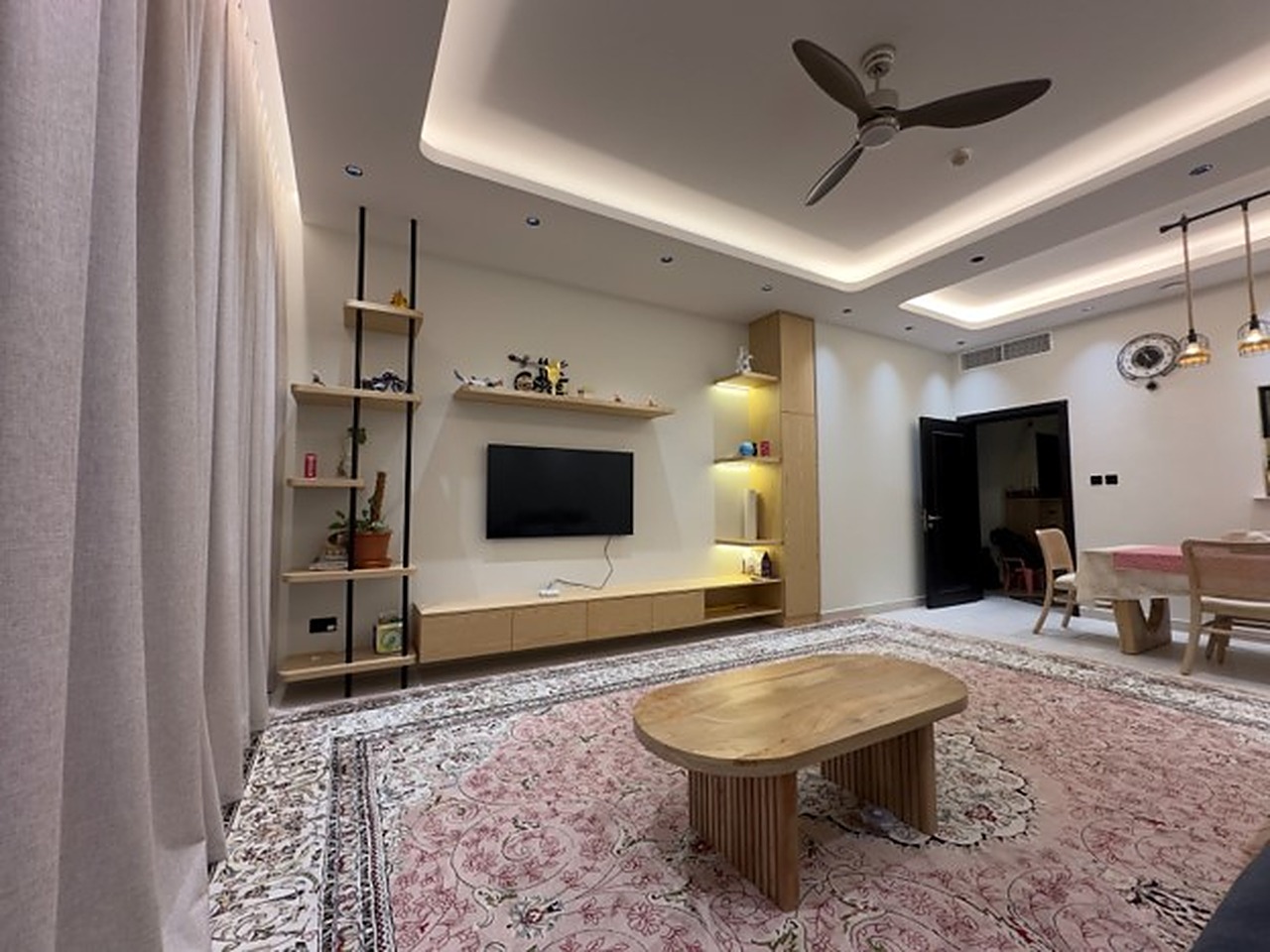
A smart apartment often gets described through what the resident can control.
Adjust the temperature from a phone. Schedule the cooling. Manage lighting more conveniently. Check security cameras. Automate selected functions according to time, occupancy or personal preferences.
But there is another side to smart living that receives far less attention: the infrastructure behind it.
Before an apartment can support connected controls and integrated systems effectively, its electrical, HVAC, network and other technical requirements need to be understood. Camera locations may require power and connectivity. Smart HVAC controls need to be compatible with the climate-control equipment. Future automation may affect electrical planning. All of this needs to coexist with ceilings, walls, joinery and the overall interior fit-out.
For homeowners researching Smart Apartment Automation in Dubai, this creates an important planning principle:
Decide what you want the apartment to do before completing the infrastructure hidden behind its finishes.
That is particularly important during a new fit-out or major renovation, when technical requirements can be coordinated before walls and ceilings are completed.
A Smart Apartment Starts Before the Smart Devices Are Installed
It is tempting to begin a smart-home project by comparing devices.
Which thermostat should I buy? Which cameras? Which app? Which automation platform?
Those decisions matter, but making them without understanding the apartment itself can create compatibility and installation problems later.
A better starting point is to identify the functions you want.
For example:
- More convenient temperature control
- Scheduled HVAC operation
- Remote monitoring
- Selected lighting automation
- CCTV integration
- Energy-management capabilities
- Centralized or app-based controls
- Future expansion
Once those requirements are understood, the technical team can determine what infrastructure may be necessary.
This is where residential fit-out planning becomes relevant.
Stofix provides residential and technical fit-out services alongside MEP and HVAC capabilities. Its wider fit-out scope includes electrical, plumbing, air-conditioning and other technical work required to make residential and commercial spaces functional.
For a property owner, coordinating these requirements during renovation can be considerably more practical than trying to introduce every technical provision after the interior is complete.
1. MEP Is the Foundation Beneath Apartment Automation
MEP refers to mechanical, electrical and plumbing systems.
In a conventional apartment, these systems already perform essential functions. When automation is introduced, some of those functions may also require sensors, controls, communication infrastructure or compatible equipment.
This is why MEP Automation Dubai should not be understood simply as adding a smart switch to an existing system.
Automation depends on what is already installed underneath.
Electrical Planning Comes First
A smart apartment may require electrical infrastructure for:
- Smart controls
- HVAC equipment and controls
- Security cameras
- Network equipment
- Sensors
- Motorized equipment
- Connected lighting
- Control panels or hubs
- Other automation components
The exact requirements depend entirely on the selected automation system.
Planning them before the interior is finished can help determine where power, cabling and technical access may be needed.
Imagine completing an apartment renovation and then deciding that a connected device requires power or wired communication at a location where no provision exists.
The solution may involve opening a newly finished wall or ceiling.
That is technically possible, but it defeats one of the advantages of planning automation during the fit-out.
Stofix’s wider fit-out services in Dubai include MEP works covering mechanical, electrical and plumbing requirements for different spaces.
Plumbing Should Not Be Ignored Either
Not every smart-apartment project involves automated plumbing functions, but plumbing remains part of the wider MEP environment.
Kitchen layouts, bathrooms, utility areas and other water-dependent spaces need to be coordinated with the residential design.
The broader principle is simple: automation planning should not happen independently of the physical services that make the apartment function.
If a renovation changes layouts, technical requirements need to be assessed before finishes make those services difficult to modify.
2. HVAC Automation Is Particularly Relevant in Dubai
Air conditioning is not a minor convenience in Dubai.
It is a fundamental part of indoor comfort.
That makes HVAC Automation Dubai one of the more practical areas for homeowners considering smart-apartment technology.
Depending on the equipment and automation platform selected, smart HVAC functionality may allow capabilities such as:
- Temperature scheduling
- Connected control
- Remote adjustments
- Zone-based management where supported
- Monitoring
- Automation based on configured conditions
The available functionality varies significantly between HVAC and automation systems.
This distinction matters.
Installing a smart thermostat or controller does not automatically make every HVAC system fully automated. Compatibility with the installed equipment and controls needs to be established first.
What Makes a Smart HVAC System Different?
A conventional HVAC system primarily performs the fundamental job of controlling indoor climate.
Smart HVAC systems add connected or automated control capabilities to that function.
The value for a resident may be less about the word “smart” and more about practical questions:
Can I control the temperature more conveniently? Can operation follow my schedule? Can different areas be managed appropriately if the system supports zoning? Can the system avoid unnecessary operation when conditions do not require it?
These are useful objectives, but the right solution depends on the HVAC architecture already installed in the property.
This is why homeowners should evaluate the HVAC system before purchasing automation equipment.
Stofix explicitly includes HVAC within its technical fit-out services in Dubai and connects its HVAC work with indoor air quality, comfort and energy efficiency.
For a renovation project, understanding the HVAC requirements early creates a stronger foundation for any compatible automation technology that may later be integrated.
3. Don’t Design HVAC and the Interior Separately
There is another issue beyond automation compatibility.
The physical HVAC installation has to work with the apartment interior.
Ceiling design, lighting, partitions, joinery and HVAC components may all compete for physical space.
If the interior is designed without considering HVAC, the result can be compromises later.
For example, a desired ceiling detail may interfere with the planned location of an HVAC component. A service point may become difficult to access after joinery is installed. A layout modification may change the cooling requirements of a space.
These are fit-out coordination problems before they become automation problems.
The correct sequence is therefore not:
Finish apartment → install HVAC → add automation → fix conflicts.
A better approach is:
Define requirements → assess existing systems → coordinate fit-out and technical infrastructure → confirm automation compatibility → execute.
This gives each discipline visibility into decisions that may affect it.
4. CCTV Integration Should Be Planned Around the Apartment
Security is another common reason homeowners become interested in connected apartment technology.
Searches for CCTV Integration Dubai may come from people who want cameras to form part of a wider connected-home environment.
But before discussing apps or integrations, basic physical questions need answers.
Where should cameras be positioned? The answer depends on the property, security requirements and applicable rules.
How will they receive power? That depends on the camera and system selected.
Do they require wired network connectivity? Again, system dependent.
Where will related equipment be located? This should be determined before the fit-out hides possible cable routes or technical spaces.
How will the cameras interact with the automation platform? Compatibility must be verified between the specific CCTV and automation technologies selected.
These are much better questions to answer before renovation work is complete.
Why CCTV Should Be Considered During Fit-Out Planning
Suppose an apartment owner completes a major renovation.
The ceiling is finished. Walls are painted. Custom joinery is installed.
Only then does the owner decide where cameras are required.
If new power or cabling routes are needed, completed surfaces may have to be modified.
Early planning can reduce this problem.
CCTV requirements can be mapped against the proposed layout so that relevant infrastructure is considered before the apartment reaches its finished state.
Stofix’s website references camera installations within its wider project capabilities, but it does not currently establish Stofix as a comprehensive specialist CCTV or surveillance provider.
Therefore, property owners requiring a particular CCTV system should confirm the specific scope, technology and specialist requirements before proceeding.
Stofix’s relevant role is strongest where security infrastructure needs to be considered alongside the wider fit-out and technical works.
5. Building Automation Is an Ecosystem, Not a Single Product
People searching for Building Automation Dubai may imagine one central application controlling everything.
Real projects can be more complicated.
Different systems may use different communication technologies, controls and software environments. HVAC equipment may have its own control requirements. CCTV may come from another ecosystem. Lighting automation may use a different platform again.
That means compatibility cannot be assumed simply because individual products are described as “smart.”
Before purchasing equipment, establish:
- Which systems need to communicate?
- Which automation platform will be used?
- Which communication standards or protocols are required?
- Is the existing HVAC system compatible?
- What electrical provisions are necessary?
- What network infrastructure is required?
- Which functions require wired connections?
- Which functions can operate wirelessly?
- What happens if internet connectivity is interrupted?
- How will systems be maintained or upgraded later?
These questions move the project from buying smart products to designing a smart environment.
6. Renovating an Existing Apartment? Start with an Infrastructure Audit
A new apartment fit-out offers more freedom because technical requirements can potentially be considered before construction is complete.
Existing apartments are different.
Walls, ceilings, electrical points, HVAC systems and network infrastructure already exist.
Before planning automation, determine what you are working with.
A practical assessment should consider:
| Area | What to Check |
| Electrical | Existing capacity, points and relevant wiring |
| HVAC | Equipment type, controls and compatibility |
| Network | Coverage, connectivity and equipment locations |
| Ceiling | Available routes and access |
| CCTV | Proposed locations, power and connectivity |
| Interior layout | Walls, partitions, joinery and furniture |
| Controls | Existing switches, thermostats and interfaces |
| Future expansion | Whether additional automation may be added later |
This assessment can reveal an important fact: not every smart feature requires a complete renovation, but not every desired feature can be added cleanly without infrastructure changes either.
The answer depends on the apartment and the selected technology.
7. New Fit-Out vs Existing Apartment: Automation Planning Is Different
For a New Fit-Out
The advantage is planning freedom.
Automation requirements can be discussed before electrical layouts, ceilings and finishes are finalized.
This may allow the project team to consider:
- Power locations
- Cabling routes
- Control locations
- Network requirements
- HVAC compatibility
- Camera provisions
- Technical access
- Future expansion
For an Existing Apartment
The priority is minimizing unnecessary disruption.
The project team should determine what existing infrastructure can remain, what needs modification and whether some requirements can be addressed without extensive civil work.
This is where a residential fit-out and technical services company can contribute to the physical side of the renovation by assessing how technical requirements interact with the apartment itself.
The actual automation platform and specialist integration scope should still be confirmed separately where required.
8. Think About Future Needs, Not Only Today’s Devices
Technology changes faster than apartments do.
A renovation may remain in place for years while connected devices and automation platforms continue evolving.
This makes future-readiness worth considering.
It does not mean installing every possible cable or technology in advance.
It means avoiding unnecessarily restrictive decisions.
For example:
- Can important technical areas remain accessible?
- Is network infrastructure being considered properly?
- Could additional controls be added later?
- Will future maintenance require destroying finished surfaces?
- Have likely future requirements been discussed before ceilings and walls are closed?
The best future-ready apartment is not necessarily the one containing the most technology today.
It is one where the technical infrastructure does not unnecessarily limit tomorrow’s choices.
9. Smart Does Not Automatically Mean Energy Efficient
This is an important misconception.
Automation can provide better control, scheduling and visibility.
But simply connecting equipment to an app does not guarantee lower energy consumption.
Actual performance depends on factors such as:
- Equipment efficiency
- System design
- Control strategy
- User behaviour
- Building characteristics
- HVAC condition
- Settings and schedules
- Maintenance
Consider air conditioning.
A smart control that allows remote temperature adjustment can be useful. But if the underlying HVAC system is poorly selected, maintained or configured, connectivity alone will not solve the fundamental performance problem.
This is why Smart HVAC Systems should be considered as a combination of suitable HVAC equipment, appropriate controls and sensible operation rather than simply a connected thermostat.
Stofix’s verified HVAC capability can support the underlying fit-out and climate-control requirements, while any specific smart-control or automation integration should be confirmed according to the selected technology.
10. Avoid Building a Smart Apartment Around Apps Alone
One of the easiest mistakes is buying connected products individually.
A smart thermostat from one ecosystem. A camera from another. Lighting controls from a third. Another app for something else.
Individually, every device may work.
Collectively, the experience may be fragmented.
Before purchasing equipment, define the desired user experience.
Do you want:
- One central interface?
- Separate systems that operate independently?
- Automated routines between different systems?
- Remote access?
- Local operation if connectivity fails?
- Different controls for different family members or occupants?
These decisions should influence product selection.
The interior and MEP planning should then support the technical requirements of that selected architecture.
In other words: don’t design the infrastructure around random devices. Design it around the experience and functions you actually want.
11. Maintenance Needs to Be Designed In
Automation adds technology, but technology still needs physical access.
HVAC equipment requires maintenance. Network hardware may need attention. Security equipment may eventually be replaced. Controls can change.
A beautiful apartment becomes frustrating if routine technical work requires dismantling large sections of decorative finishes.
During fit-out, ask:
- Can HVAC equipment be serviced?
- Are important control components accessible?
- Can network equipment be reached?
- Are cable routes documented?
- Can devices be replaced without major civil work?
- Are technical access points being sacrificed purely for aesthetics?
Stofix also provides maintenance services covering HVAC, electrical, plumbing and flooring requirements, reinforcing the importance of considering the apartment beyond initial handover.
Good technical planning considers the day something needs repairing, not just the day everything is installed.
12. What Should You Decide Before Talking to Contractors?
You do not need to know every technical detail.
But you should know what you want the apartment to accomplish.
Before requesting quotations, create a simple list.
- Comfort — Do you want smarter temperature control or scheduling?
- Security — Are cameras part of the plan? Where do you need security visibility?
- Lighting — Do you want conventional switching, connected controls or automation?
- Convenience — Which everyday actions are you trying to simplify?
- Remote Access — Which systems should be controllable when you are away?
- Energy Management — Do you want greater visibility or control over how systems operate?
- Future Expansion — Which features might you add later?
Once the objectives are clear, technical professionals can translate them into infrastructure and system requirements.
Without that step, quotations from different contractors may describe completely different solutions because each company is solving a different interpretation of “smart apartment.”
A Smart Apartment Planning Checklist
Before beginning a major renovation or technical fit-out, use this checklist:
| Planning Area | Question to Answer |
| Automation goals | What exactly do I want to automate? |
| HVAC | Is the existing system compatible with the intended controls? |
| Electrical | Are the required power and control provisions available? |
| Network | What connectivity does the selected system require? |
| CCTV | Where will cameras and associated infrastructure be located? |
| Lighting | Will lighting be conventional, connected or automated? |
| Interior fit-out | Do technical requirements conflict with ceilings, walls or joinery? |
| Integration | Which systems need to communicate with each other? |
| Compatibility | Has compatibility been verified rather than assumed? |
| Maintenance | Can technical components be accessed after completion? |
| Expansion | Could future technology be added without major rework? |
| Responsibility | Who coordinates the automation requirements with the physical fit-out? |
The final question is particularly important.
Multiple specialists may be involved, but someone needs to make sure their requirements are reflected in the physical apartment.
Where Stofix Fits into Smart Apartment Planning
This needs to be defined accurately.
Stofix Technical Services provides residential fit-out, MEP, HVAC, electrical, plumbing, fabrication and maintenance capabilities.
Those services form part of the physical and technical foundation on which many smart-apartment technologies depend.
However, Stofix’s current website does not clearly establish comprehensive Smart Apartment Automation, Building Automation, BMS or full smart-home integration as standalone services.
Therefore, a homeowner should not assume that every automation platform, CCTV system or smart-home technology is automatically included within Stofix’s scope.
Instead, the sensible approach is to discuss the intended automation requirements early.
Stofix can then clarify which MEP, HVAC, electrical, fit-out and related technical requirements it can handle and whether additional specialist integration is required for the selected automation system.
That is more useful than discovering the scope boundary after the renovation has already started.
Frequently Asked Questions
- What should I plan before installing smart apartment automation in Dubai?
Start with the functions you want rather than individual devices. Then assess electrical, HVAC, network, CCTV and other infrastructure requirements. Compatibility between the selected automation technology and existing systems should be confirmed before installation. - Can HVAC be integrated with apartment automation?
Many automation technologies can incorporate HVAC controls, but compatibility depends on the HVAC equipment, controls and automation platform. The existing HVAC architecture should therefore be assessed before selecting a smart control system. - What is HVAC automation?
HVAC automation generally refers to using connected or automated controls to manage aspects of heating, ventilation and air conditioning. Depending on the system, functions may include scheduling, remote control, monitoring or automated responses to configured conditions. - What is MEP automation?
The term can refer broadly to introducing monitoring, controls or automation into mechanical, electrical and plumbing-related building systems. The exact scope varies considerably between projects and technologies, so it should not be treated as one standardized product. - Should CCTV infrastructure be planned during an apartment renovation?
Yes, if CCTV is part of the intended project. Considering camera locations, power, cabling and connectivity before walls and ceilings are finished can reduce the need for visible cabling or later modifications. - Can an existing apartment be converted into a smart apartment?
Potentially. The feasibility and complexity depend on the existing electrical, HVAC, network and physical infrastructure as well as the selected automation technology. Some functions may be relatively straightforward to introduce, while others may require technical modifications. - Does smart HVAC automatically reduce electricity consumption?
No. Automation can improve control and scheduling, but actual energy performance depends on equipment efficiency, system design, settings, building conditions, maintenance and user behaviour. - Does Stofix provide Smart Apartment Automation in Dubai?
Stofix’s current website establishes residential fit-out, MEP and HVAC capabilities, but does not clearly establish comprehensive smart-home or building-automation systems as a standalone service. Property owners should discuss their intended automation requirements directly with Stofix so the applicable technical and fit-out scope can be confirmed.
Conclusion: Build the Infrastructure Around the Smart Home You Actually Want
The most important part of Smart Apartment Automation in Dubai may not be the device you eventually control from your phone.
It is the planning that happens before installation.
HVAC controls depend on the HVAC system behind them. CCTV integration depends on suitable security infrastructure. Connected devices depend on power and communication. Building automation depends on compatibility between systems. And all of those technical requirements need to coexist with the apartment’s walls, ceilings, lighting, joinery and finishes.
That is why smart-apartment planning should begin during the fit-out rather than after everything else has been completed.
For property owners renovating or fitting out an apartment, Stofix Technical Services provides verified MEP, HVAC, electrical, plumbing, residential fit-out and maintenance capabilities that can support the underlying technical environment.
Before construction begins, discuss the automation features you eventually want with the project team. Determine the infrastructure they require, confirm which systems are compatible and clarify which elements fall within the fit-out scope.
A genuinely smart apartment is not created by adding more devices. It is created by making the right technical decisions before those devices need somewhere to work.