
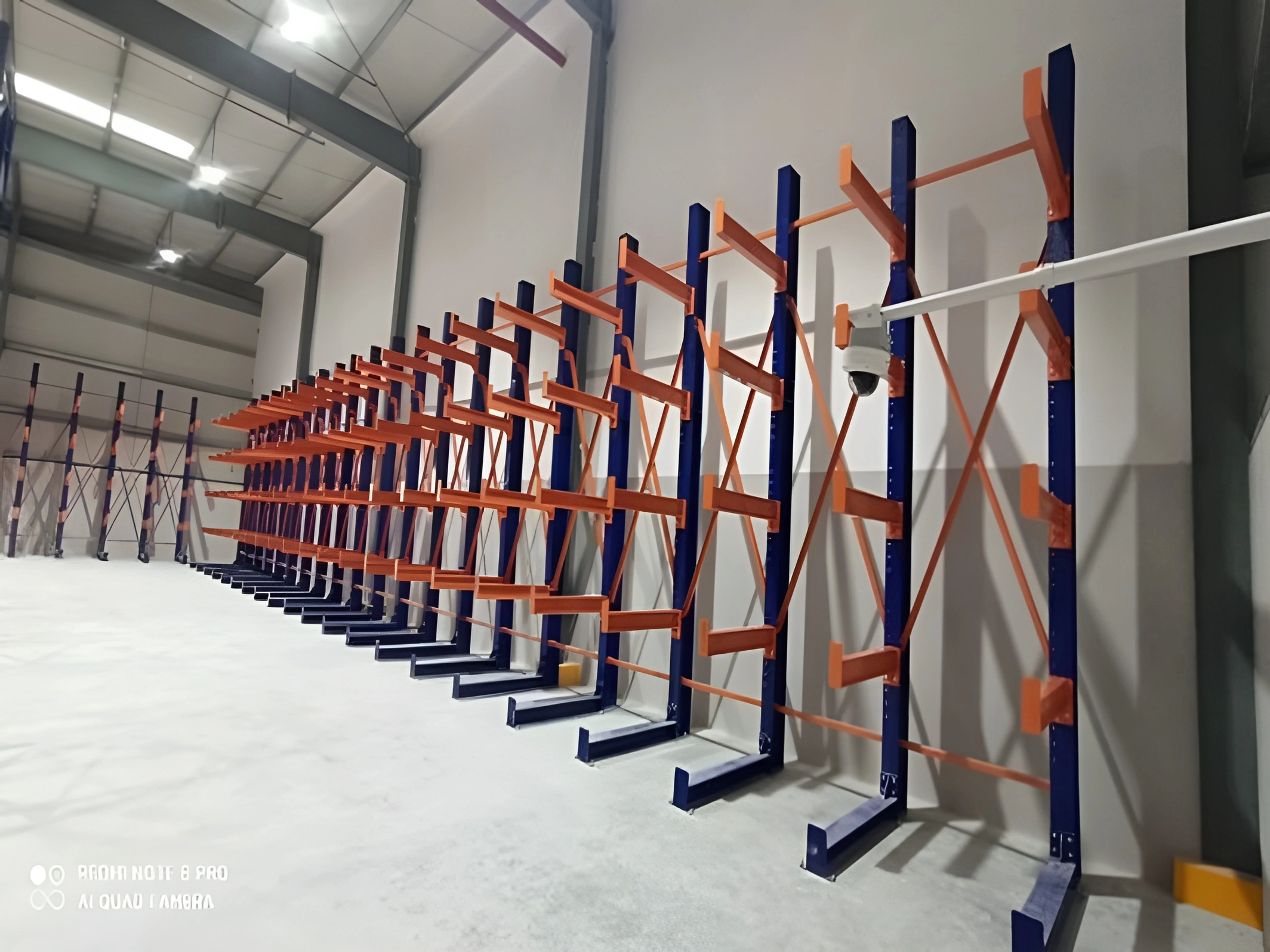
At Stofix, we work with warehouses every day that are under constant pressure to store more, move faster, and use every inch of available space without compromising safety. For facilities handling long, bulky, or oddly shaped materials, standard shelving and pallet systems simply fall short. This is where cantilever racking has become the go to choice for businesses across manufacturing, construction, and logistics. Unlike conventional storage frameworks, cantilever racking is built specifically to support items that don’t fit neatly into boxes or on pallets, which makes it one of the most practical heavy duty storage solutions available today.
Built for the Loads Other Systems Can’t Handle
At its core, cantilever racking is made up of vertical columns fitted with horizontal arms that extend outward, with no front support columns getting in the way of loading or unloading. This open access design is what sets cantilever storage racks apart from traditional racking systems. Materials such as steel bars, timber, PVC pipes, furniture, and structural components can be slid on and off with ease, whether by forklift, crane, or by hand. Because there are no cross aisle supports blocking access, businesses save real time during load and retrieval cycles, and that benefit only grows in value as warehouse throughput demands keep rising.
A Growing Market Reflects Rising Demand
Industry research published in 2026 shows just how central this storage format has become to modern warehousing. Recent market analysis places the global cantilever rack sector at roughly USD 1.49 billion in 2026, with steady annual growth expected as facilities scale up their storage capacity to meet ecommerce and manufacturing demands. Longer term forecasts from several research firms point to continued expansion through the early 2030s, driven largely by warehouse automation, the resurgence of domestic manufacturing, and the ongoing need to store long or oversized inventory more efficiently. Analysts also note a shift toward modular, data connected racking systems that give operators better visibility into capacity planning and lifecycle costs, a trend that is reshaping how industrial cantilever racking is designed, specified, and procured. This sustained investment underlines a simple truth: as supply chains grow more complex, businesses need heavy duty storage solutions that can flex with changing inventory profiles without losing structural reliability.
Strength and Versatility in One System
One of the biggest advantages of heavy duty cantilever racks is how adaptable they are. Arms can usually be adjusted or reconfigured to different heights and load capacities, so a single system can accommodate a wide variety of product dimensions. This flexibility matters most for businesses whose inventory changes seasonally or whose product lines expand over time. Instead of investing in an entirely new storage system, companies can simply reconfigure their existing cantilever racking to meet new requirements, which extends the useful life of their investment and reduces long term capital costs.
Durability is another defining feature. Built from heavy gauge steel and designed to bear substantial weight across long spans, cantilever storage racks are made to withstand the rigors of daily industrial use, including exposure to forklifts, weather in outdoor storage yards, and repeated loading cycles. Many systems are also available in single or double sided configurations, giving warehouse planners more control over how they use available floor space.
Supporting Safer, More Efficient Warehouse Storage Systems
Safety is a non negotiable consideration in any industrial setting, and cantilever racking addresses this directly. By removing the need to stack long items horizontally on the floor or lean them against walls, these systems cut down on trip hazards, prevent material damage, and support clearer, more organized warehouse layouts. Combined with proper load rating compliance and regular inspection, cantilever racking helps businesses meet safety standards while keeping operations running smoothly.
For facilities storing pipes, lumber, metal sheets, furniture, or any other long or awkwardly shaped inventory, the case for cantilever racking is clear. It offers open, obstruction free access, adjustable configurations, and the structural strength needed to handle serious industrial loads, all while fitting smoothly into broader warehouse storage systems. As demand for smarter, more resilient storage infrastructure keeps growing, industrial cantilever racking stands out as a future ready investment for any business serious about optimizing its heavy duty storage capacity.
Looking to upgrade your facility’s storage infrastructure? Stofix specializes in designing and installing tailored cantilever racking systems built around each facility’s specific load, span, and layout requirements. A well designed cantilever racking system can transform how your warehouse handles its most challenging inventory, combining strength, flexibility, and long term value in a single solution. Visit https://www.stofixts.com/ to explore their full range of storage solutions.