
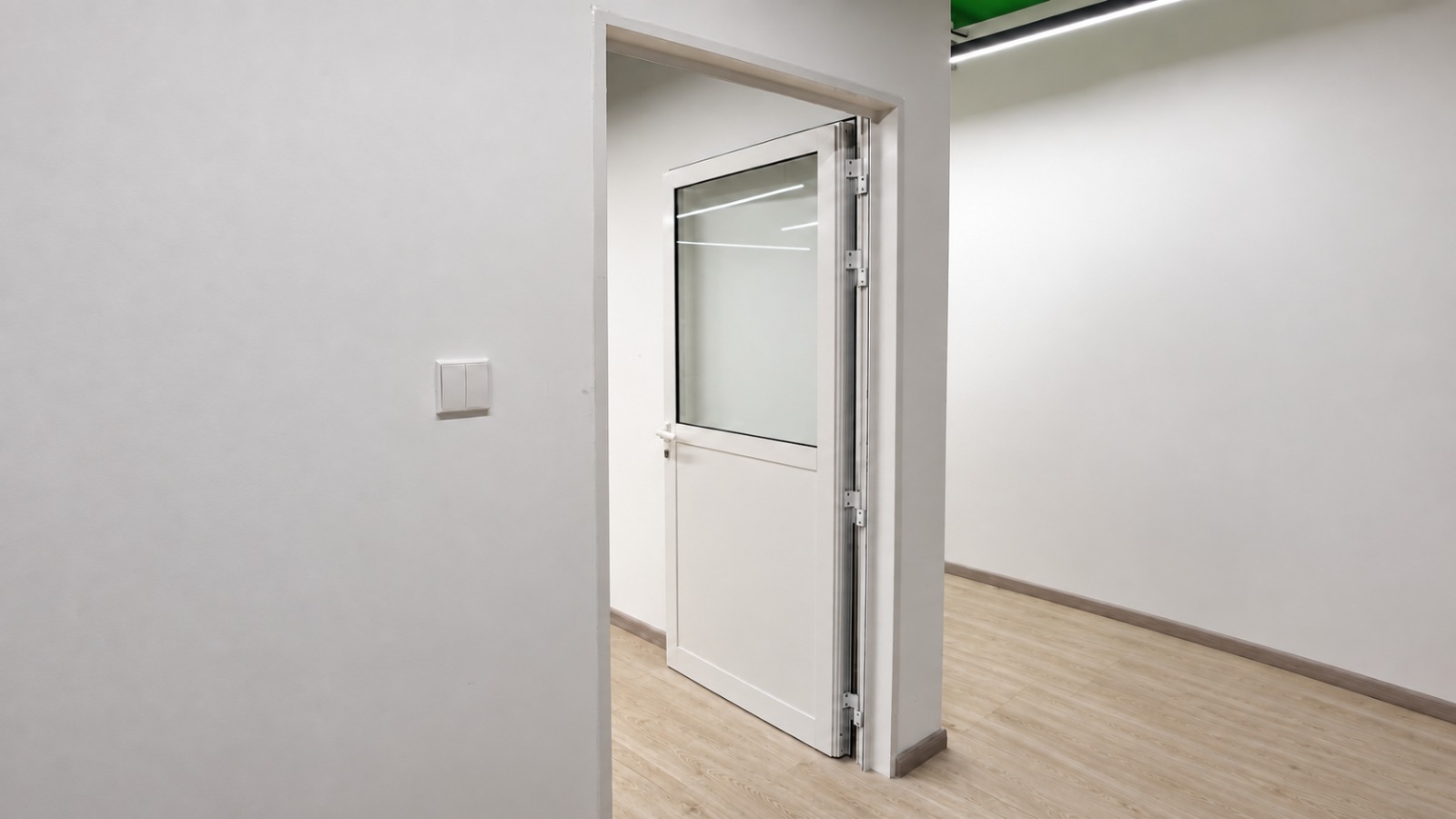
The door is often the first thing a customer touches and the first thing a burglar tests. It also decides how much daylight reaches your floor and how smoothly people move through the building. That’s a lot of responsibility for one fixture, so it’s worth getting right before anything is ordered.
Aluminium and glass are a common pairing in commercial interiors because they’re tough and look clean. But the right door for an office reception is rarely the right one for a warehouse or a busy restaurant. Layout, foot traffic, safety rules and the purpose of the entrance all matter. Stofix Technical Services handles fit-out and fabrication for commercial properties, and the advice below comes from the kinds of questions that come up on those projects.
Why Aluminium and Glass Work in Commercial Buildings
Commercial doors get used hard. Staff come and go, customers push through, and deliveries arrive at odd hours. A door needs to survive that and still look decent after a couple of years.
1.Durability: Aluminium is light but strong, and it doesn’t rust. Pair it with properly rated safety glass and you get a door that copes well with daily use. Just remember the frame is only part of the story. The glass, the hardware and the quality of the installation all affect how long it lasts.
2.Light and appearance: Clear glass makes a reception or showroom feel open and lets daylight in. Where privacy matters, such as meeting rooms or manager’s offices, frosted or tinted glass gives you seclusion without losing the modern look.
3. Upkeep: These doors are easy to look after. Wipe the glass, check the hinges, locks and closers now and then, and that’s most of it. In dusty warehouse environments, add a regular check of the moving parts.
The Main Door Types
1.Swing doors: The standard choice for offices, meeting rooms and internal partitions, in single or double leaf. They need clearance to open, so check the floor space first. Decent hinges, handles and closers make a big difference in busy areas.
2.Sliding doors: Good when space is tight, since nothing swings into the room. You’ll see them in showrooms, office entrances and some retail units. The track is the critical part: if it’s poorly installed, the door will stick and wear out early.
3.Automatic doors: Common in shopping centres, hotels and healthcare buildings where lots of people pass through. Before choosing one, think about sensor position, safety features, what happens in an emergency, and accessibility.
4.Doors for warehouses and industrial sites: Aluminium and glass suit offices, reception areas, internal partitions and staff entrances. They aren’t the answer for loading bays or anywhere that takes heavy knocks. Those areas need proper industrial door systems. Experienced warehouse fitout contractors can tell you where glass doors make sense and where they’d get in the way of operations, storage or safety.
What to Think About Before You Buy
1.Start with how the space is used: An office entrance, a warehouse and a restaurant have very different needs. Shops want visibility, warehouses want practical access for people and materials, and restaurants need doors that cope with both customers and staff moving between areas. Stofix Technical Services can factor door requirements into the wider fit-out and fabrication plan.
2.Get the glass right: This is a safety decision as much as a style one. Tempered or laminated safety glass is usually the right starting point, depending on where the door sits.
- Clear glass suits entrances and showrooms where visibility matters.
- Frosted glass gives privacy for offices and meeting rooms.
- Tinted glass helps with glare and light levels.
- Laminated glass holds fragments together if it breaks.
The final choice should reflect the door size, the risk of impact and local building requirements.
1.Check the frame: It has to hold the glass securely and cope with how often the door is used. Look at the profile, thickness, finish and whether it works with the hardware you want. Powder coating comes in plenty of colours, so you can match your interior or brand.
2.Think about security and access: Some entrances are fine with a standard lock. Others need electronic access control. Decide who should get in, when, and what happens in an emergency. Any electronic locking has to be compatible with the door and its safety requirements.
3.Don’t forget the heat: In the UAE, air conditioning does most of the work in commercial buildings, so leaks and heat gain cost money. Good glazing and proper seals help. Where thermal performance matters, look at thermally broken frames and insulated glass units.
Doors in Warehouse Fit-Outs
A good warehouse fitout is about more than racking. Access points, work zones, admin offices, walkways and safety all have to be planned together.
Aluminium and glass partitions and doors are a popular way to build office cabins, meeting rooms and reception areas inside a warehouse. Staff get daylight and a clear view of the floor, while the office stays separate from the operational area.
When choosing a warehouse fitout contractor, ask about their experience coordinating doors, partitions and storage layouts together. Skilled warehouse fitout contractors will make sure a door doesn’t block a pedestrian route, a forklift path or an emergency exit.
The same thinking applies to any commercial warehouse storage solution. Storage zones, admin areas and access routes need to be planned as one system, and door positions have to fit around shelving, racking and material handling.
In industrial fitouts, the working environment, security and the movement of people and equipment all drive the choice. Glass doors work well for administrative sections, while heavy-duty doors belong in the operational zones.
Doors in Retail Fit-Outs
For a shop, the entrance is the first impression. A bright glass front tells people what’s inside and invites them in.
A good retail fitout company Dubai businesses can rely on will think about how the entrance, displays, lighting and customer flow work together. Quality retail fitout services Dubai projects often bundle aluminium-framed glass doors with partitions, display units and finishing work.
For a retail door, think about:
- How many customers pass through each day
- How much space there is around the entrance
- Whether products and promotions stay visible
- Access for customers with mobility needs
- Security when the shop is closed
- How much direct sun and heat the entrance takes
Sliding or automatic doors often suit busy sites, while a simple swing door is usually fine for a small unit.
Doors in Restaurant Fit-Outs
Restaurants have to balance looks, hygiene, comfort and how easily staff can work. Aluminium and glass work for main entrances, private dining rooms and some internal partitions.
On any restaurant fitout Dubai project, the door layout should suit the seating plan, kitchen access and emergency exits. Glass keeps a dining room bright, and frosted panels give private rooms some discretion. Aluminium frames come in styles to match most interiors.
Before installing, check:
- Expected customer volume
- How easy the door is to clean
- Any need for privacy or noise reduction
- How staff move between dining and service areas
- Ventilation and fire-safety rules
- How well the hinges, handles and closers will hold up
Why Fabrication and Installation Matter
A great door will still cause headaches if it’s measured badly or fitted carelessly. Poor alignment makes doors hard to use, and cheap fittings wear out fast.
Good fabrication work in Dubai starts with accurate site measurements and the right frame and glass specification. Before anything is made, the contractor should confirm opening sizes, wall conditions, floor levels and hardware. That avoids costly changes on site. During installation the frame needs to be aligned properly, the glass secured, and the hardware adjusted until the door moves smoothly.
Stofix Technical Services provides fit-out and fabrication for commercial clients, and coordinating door installation with the rest of the fit-out keeps design, quality and function consistent.
Mistakes People Often Make
- Choosing looks over function: A beautiful door that can’t handle the traffic will disappoint quickly.
- Skipping safety checks: Glass type, accessibility, opening direction and emergency access need to be settled before the design is final.
- Buying cheap hardware: Hinges, locks, rollers and closers decide how often you’ll be calling for repairs.
- Ignoring the layout: Doors shouldn’t block walkways, aisles, equipment or exits.
Forgetting maintenance: Small problems like loose fittings and worn seals grow if nobody looks.
Keeping Doors in Good Shape
- Clean the glass with non-abrasive products
- Wipe dust and deposits off the frames
- Check hinges, handles, locks and closers
- Look for damaged seals and weatherstripping
- Keep sliding tracks clean and clear
- Call for repairs as soon as a door gets hard to operate
- Replace cracked glass and faulty hardware promptly
In warehouses and industrial sites, check more often if dust and heavy use are a problem.
Conclusion
The best commercial door balances durability, safety, security, energy efficiency and appearance for the way your building is actually used. Whether it’s a warehouse office, a shop or a restaurant, a well-chosen door improves access, brings in daylight and supports the interior design. Work with experienced professionals so that selection, fabrication and installation fit into the wider fit-out.
FAQs
1.Are aluminium and glass doors suitable for commercial buildings?
Yes. They’re widely used in offices, shops, restaurants and showrooms. The right design depends on traffic, security, safety needs and the purpose of the building.
2.Which glass is suitable for commercial doors?
Tempered and laminated safety glass are the usual options. The right one depends on the door’s location, size and impact risk, plus local requirements.
3.Can they be used in warehouses?
Yes, for office cabins, reception areas, partitions and staff entrances. Heavy-duty operational areas need specialised industrial doors.
4.What should I consider when choosing a commercial door in Dubai?
Think about its use, the glass, frame quality, security, hardware, maintenance and how well it copes with the local climate.
5.Are they suitable for retail shops?
Yes. They offer visibility, daylight and a modern look. Plan around customer traffic, accessibility, security and the space at the entrance.